Share This Article
Metroid Prime 4 is a good game, but with plenty of drawbacks that are difficult to ignore. Especially for someone who was hoping for it to finally close the gap between 2D and 3D Metroid for me.
I’m a Metroid fan, and my story with the franchise started with the original Metroid on the NES Mini I got for Christmas in 2016.
Since then I’ve played Super Metroid several times, followed by the original Metroid 2 and also its remake on the Nintendo 3DS. Then I discovered that my little bro somehow had a copy of Metroid Fusion, and I also played that one.

Then on Switch I got the opportunity to play through Zero Mission and, of course, one of my most anticipated and favorite games on the entire console, Metroid Dread.
On my entire Metroid journey, I was just missing one thing: getting into the Metroid Prime series. And I finally did it when Metroid Prime Remastered hit the Switch. And how did that go?
I didn’t like 3D Metroid
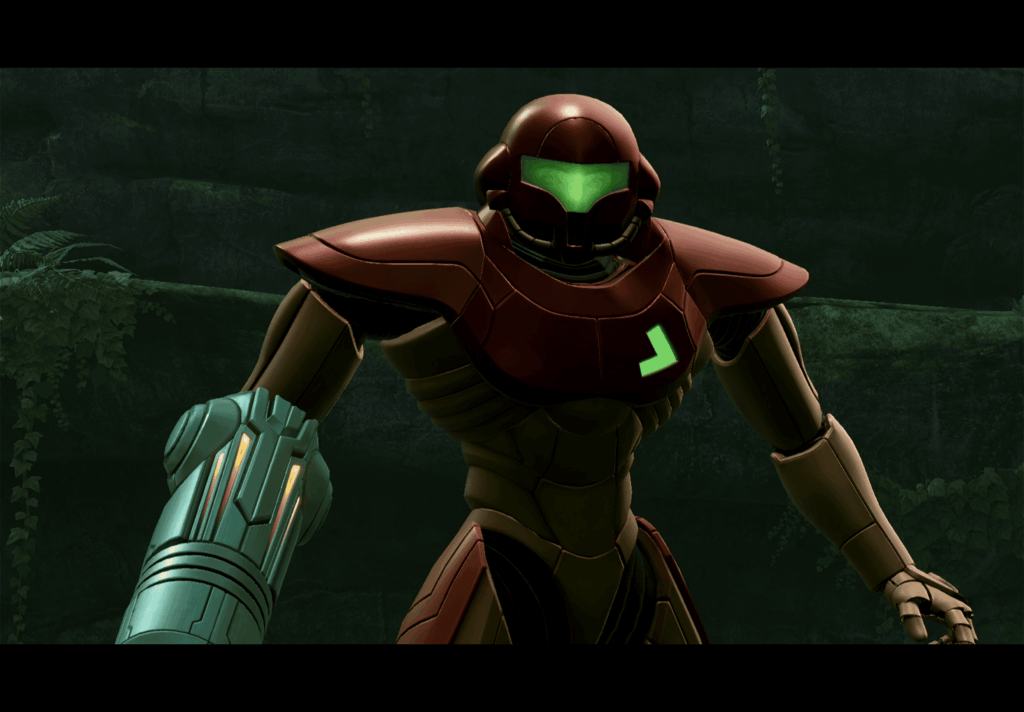
Everyone praises it as being one of the best 2D to 3D transitions, but I just couldn’t get into it, mainly due to how confusing it felt navigating through the levels. So, my hype for Metroid Prime 4 Beyond just wasn’t there.
But alas, I couldn’t resist a new Nintendo game release and got it alongside all the new Metroid Amiibos as well (rip my wallet).
In the end I finished the game in about 20 hours with 100% items and 86% scan completion. I also played the game on my girlfriend’s Switch Lite for a couple of hours just to see how it holds up on the older gen console. And, as of writing this, I’m suffering my way through Volt Forge in Hard Mode.
With this said, let’s get on with this Metroid Prime 4 Beyond review and see if it’s finally the game to close the gap between 2D and 3D Metroid. And ultimately, decide if it’s worth your time.
Watch Youtube Video
The Story of the Lamorn

Metroid Prime 4: Beyond sees Samus landing on a Federation Force base after receiving a distress call.
The Federation Force found a mysterious artifact that seems to be of enough value to justify a full-on raid of space pirates.
After shooting some practice targets, Samus eventually reaches a Metroid-infused alien monster that poses little threat to the powerful bounty hunter and is swiftly dispatched.
Then, Sylux storms in and attempts to take the Artifact, but Samus intervenes and is whisked away to an unknown, desolate planet, Viewros, somewhere in the galaxy.

This voyage was so intense that Samus, once again, sees herself completely stripped of her powers. Luckily for her, the inhabitants of this planet, the Lamorn, prophesized her coming and gave her a new power, the Psychic Crystal.
With it, they hoped Samus would help them grow the Memory Fruit. A fruit that contains the memory of the Lamorn. By planting it, they would make sure their history would not be forgotten and could serve as a cautionary tale for others.
As thanks for this noble action, the Lamorn also told Samus how to escape from Viewros. Using her new psychic abilities, she needs to collect 5 teleporter keys scattered in 5 different areas.

This mission is definitely bittersweet for Samus. She arrives yet again to a planet of a dying civilization that cannot be saved, instead the only thing she can do is preserve their memories.
A bit cliché, but the narrative that was set up was compelling and well above my expectations in terms of exposition when compared to 2D Metroid.
In recent titles such as Metroid Dread, they’ve experimented more with cinematic cutscenes, and it’s a direction I want to see more of since it truly modernizes the storytelling of 2D Metroid games.
I was truly able to connect with the story around Viewros and the Lamorn, which urged me to scan my surroundings for any piece of new lore I could. And with each one I found, it made me wonder if they truly deserved being saved or if they got what they deserved.
This was all that the game needed in terms of story, in my opinion, but then, they’ve decided to give us something extra.
You’re not alone, Samus.
Samus wasn’t the only one teleported to Viewros, and while you’re exploring it, you’ll be surprised to find companions that will cling to you like a Baby Metroid.
The only difference is that the Baby Metroid doesn’t talk.
The Companions

To me, Metroid is about freedom of exploration in isolation. It’s about encountering an obstacle you can’t go through, remembering it, and then coming back later with a brand-new power-up that allows you to proceed further into your mission.
And at times, when you get one of these power-ups, the Companions will actively tell you where you should go to use it. And it infuriates me.
This is part of the core identity of Metroid, and if they wanted to follow this direction, they should at least give the player the option to turn it off.
Now, they don’t do this for every single obstacle. You won’t be passing destructible rocks and immediately hear your companion say, “Hey, Samus, I bet a missile or two could blast through those rocks!”

But even so, it’s annoying when it happens, and it hinders my Metroid experience.
As for the characters themselves, I didn’t mind them much. I had a laugh or two with their quirky personalities but had difficulty in truly connecting with them due to the issue mentioned and the fact that Samus never speaks a freaking word to them. Even in Metroid Fusion we got some dialog text, so you can’t say that Samus has always been a silent protagonist.
Their interaction is mostly one-sided, with Samus nodding and shrugging once in a while in agreement. To them it must feel like talking to a brick wall, and to me it made the conversation feel awkward.
But interacting with these characters is just a part of the game, thankfully. And there are plenty of things to love in the gameplay department, especially for someone who enjoys 2D Metroid.
The Metroid Gameplay Experience

As expected, there are plenty of power-ups to acquire from the different levels in Viewros. Part of them are the power-ups we are used to seeing for years now, but enhanced with Samus’s new psychic abilities. And I’d like to highlight just a few to not spoil you entirely.
The Psychic Power Bomb is probably my favorite one. By holding the ZR button, you will not just drop a bomb but also make the bomb float in the air. Then you can morph out of the ball, use the Psychic Glove to grab it, and either use it to complete puzzles or simply throw it at your enemies.
It’s not the deepest mechanic, but it looks super cool doing it, and it’s great to save missiles. It is helpful in Hard Mode, where ammo doesn’t fill automatically in Save Stations.
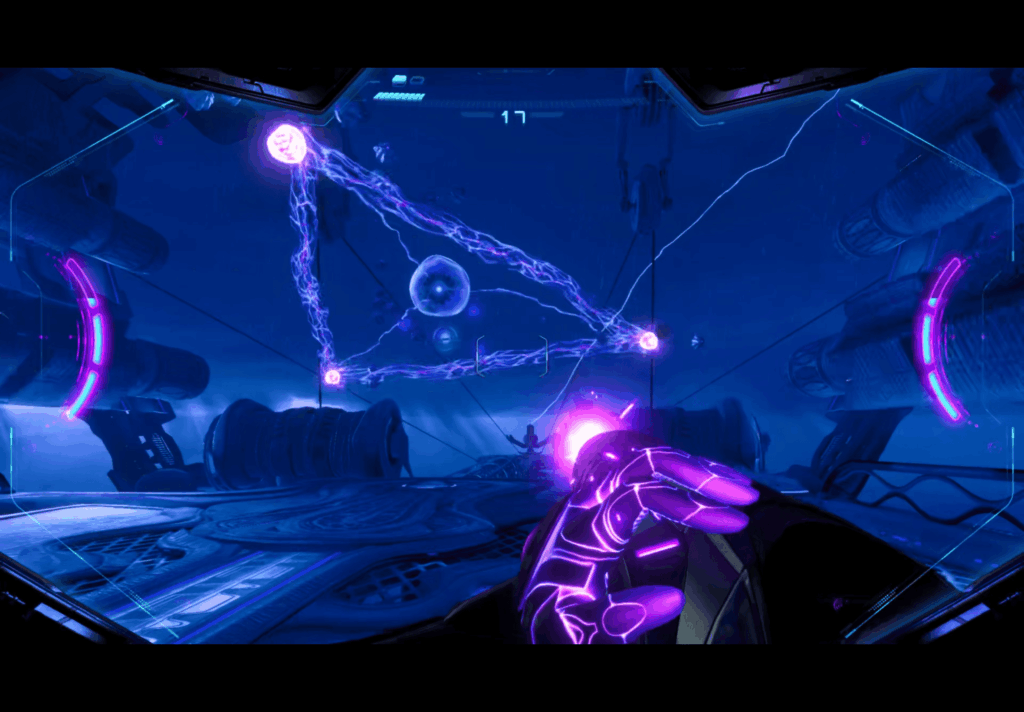
But not all powers come from older games, there are a few new ones, and the one I want to highlight here is the Control Beam. By activating your Psychic Visor, you can shoot a beam that will slow down time and control its direction.
While you’ll be using it mostly to activate far-away buttons in places you can’t reach or in certain boss battles, you’ll definitely want to get to using it against large groups of enemies. And once again, it’s super useful to use in Hard Mode or a normal playthrough.
You can hit up to three enemies with a single beam, and while the damage isn’t great, it knocks them down for a couple of seconds, allowing you to dish out some missiles or elemental shots.
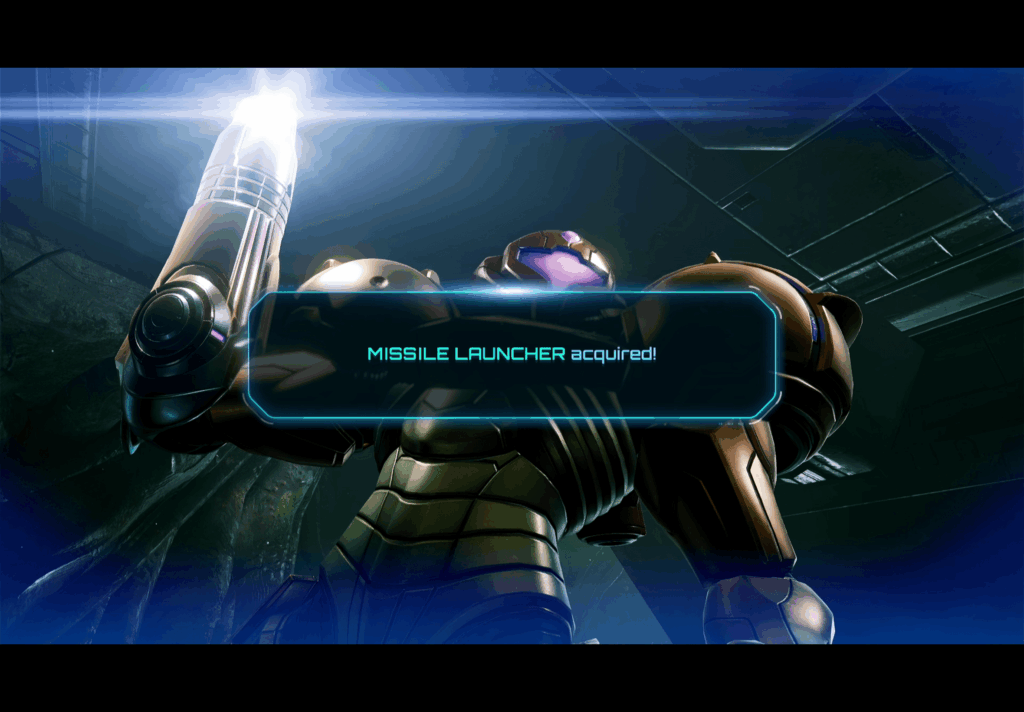
Missiles work just like in any Metroid game, and I always love using them. They are more powerful than your standard shot but require ammo to use. You can use them to swiftly end your enemies or open doors and other destructible environments to acquire item upgrades or progress further in the levels.
Elemental shots work similarly, but different enemies have different weaknesses, so you’ll want to choose your shot accordingly. Moreover, despite them all sharing the same ammo, I never saw myself running out of it since I always did my best to explore and collect every item upgrade I could.
Which is made easier is an easier task if you wait until you get the Thunder Shot. In each level there are robots that, once charged with a bolt of electricity, will show where all the item upgrades are in a certain level.

It might take away from the exploration, but I don’t mind it at all. It was either this or having to look up a guide online. Also, previous modern 2D Metroid games also had a scan functionality to locate item upgrades, and it’s something that I want to keep using if they keep implementing it correctly.
You only get access to the Thunder Shot pretty late into the game, and by then you should have gone through and explored all the major dungeons and beat most of the bosses.
Boss fights were fun and challenging, however, you need to be prepared to exploit their weakness as much as possible, otherwise the fight will drag on, which is in line with other Metroid games, and even Dread. Luckily, you can scan the bosses to learn more about them in case you’re lost mid-fight without knowing what you can do.
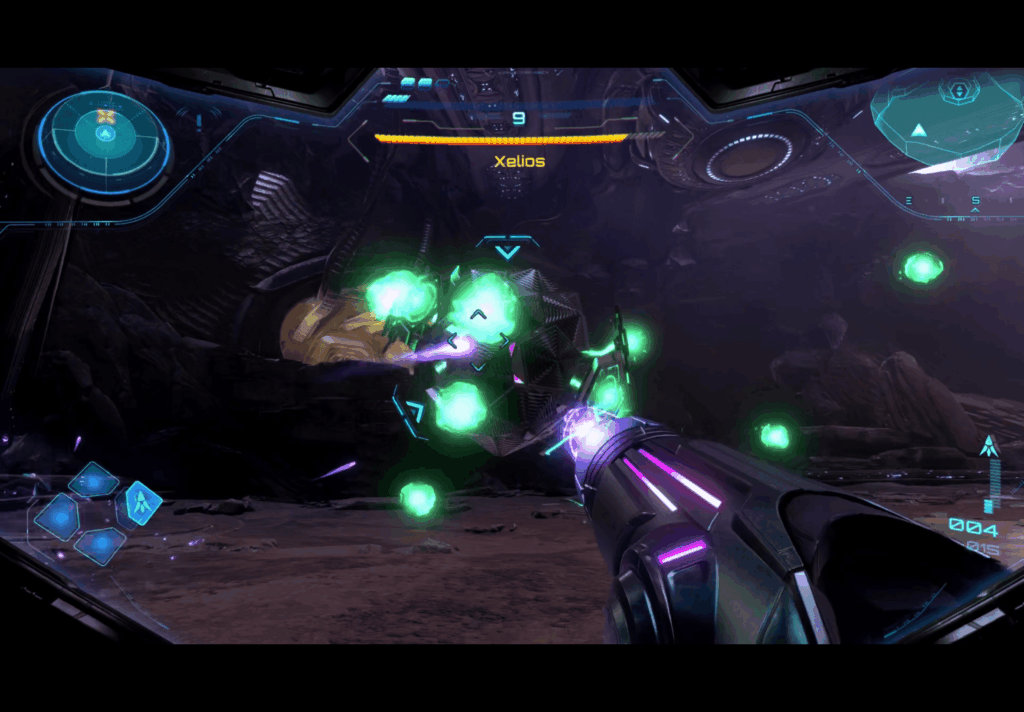
But making sure you have as many item upgrades before a boss fight will make sure you have more time to think before running out of resources. Meaning, just like in 2D Metroid games, you’ll need to backtrack.
However, the experience is far worse in Metroid Prime 4, because there’s a literal desert you need to cross.
This is where Metroid Prime 4’s gameplay starts to take a noticeable hit. You move from beautifully crafted dungeons filled with detail into a much blander, uninspired section. And the worst part? You cannot skip it.
Sol Valley

Once you are done with Volt Forge, you’ll leave with the coolest suit and the sickest ride you’ll ever get in the entire Metroid series.
Vi-o-la is a motorbike that you must use to traverse through the harsh desert called Sol Valley. On foot you won’t make it out alive since you are too slow, and there are enemies that even with Samus’s blaster, it will not be enough to survive.
But Vi-o-la is powerful enough to dispatch them quickly.
Riding it is super cool and feels great to control. While there aren’t many bike tricks you can do, it was always fun to boost up a natural rock ramp and fly for brief moments.
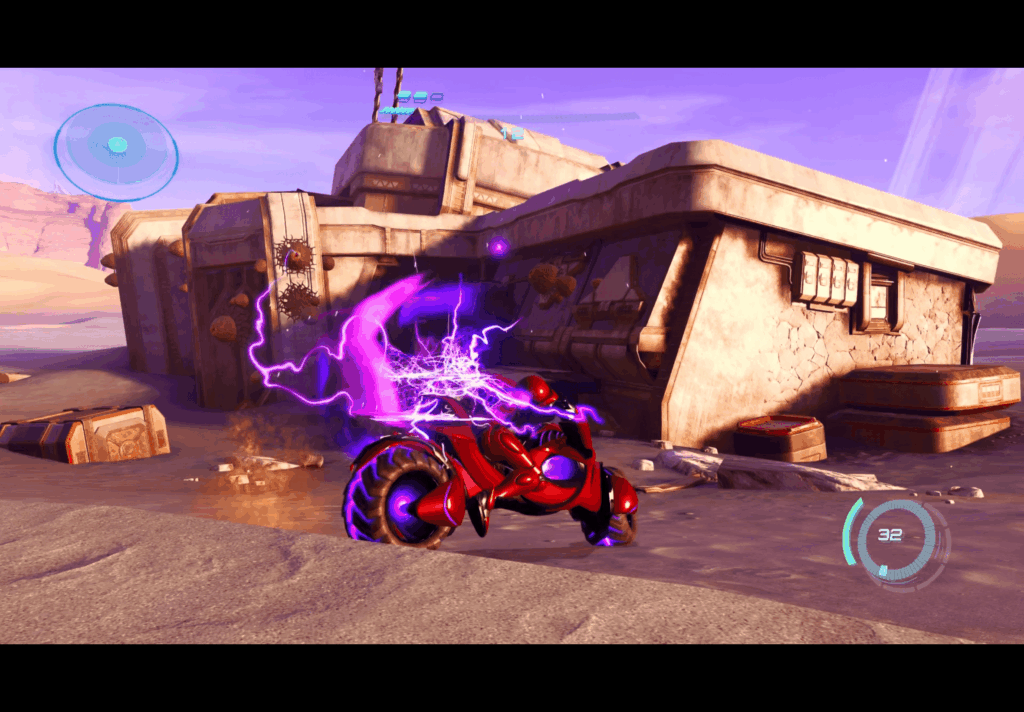
But this gets stale after a while. Since there isn’t much else you can do with Vi-o-la in Sol Valley. Actually, there’s not much you can do, period.
When I started exploring, I was hit with its biggest disappointment. Pretty early I discovered a shrine that functions identically to the shrines of Breath of the Wild, and it was amazing.
Solving puzzles with Samus’s new abilities was one of my favorite parts thus far, and I was eager to explore the desert and find more of these challenges. Only to be faced with the crude reality that there were only 6 in total.
There are other areas of interest in the map with some puzzle solving, but they are scarce as well.
Even so, the game requires you to spend a lot of time in the desert, and if you don’t, your progression will come to a halt later on.

**This is a minor spoiler, but before reaching the final area of the game, you need to fully grow the Memory Fruit by feeding green crystals to the altar in Green Fury.**
And you’ll need a lot of them, trust me. As soon as you get Vi-o-la and hit the desert, do not ignore them, smash through every single crystal you see. You’ll thank me later.
I did this without knowing it was a requirement for the end game, so I only spent a few more minutes collecting the crystals I required. Moreover, I have the Vi-o-la + Samus Amiibo, and I really wanted to unlock all the available skins, and the only way to do it is by racking up those miles.
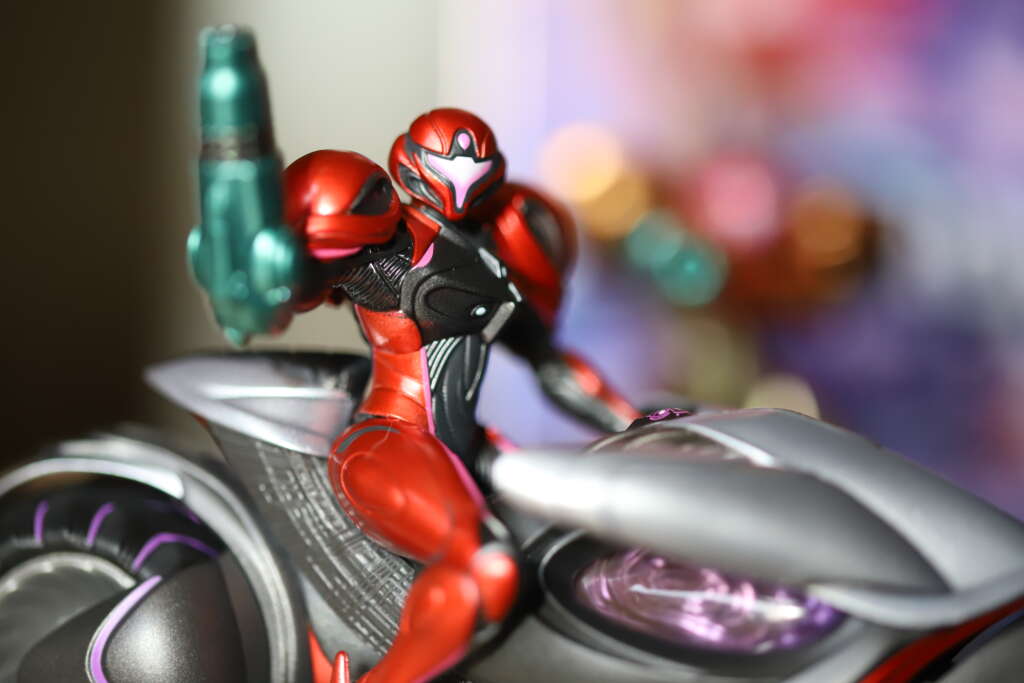
In general, the whole Sol Valley area feels undercooked. The bike is a cool idea, but I would love to see it more integrated into the levels and make all the areas interconnected like a true Metroid game.
But I would rather not end on a bad note, so let’s focus on where Metroid Prime 4 truly shines.
It’s a Piece of Art
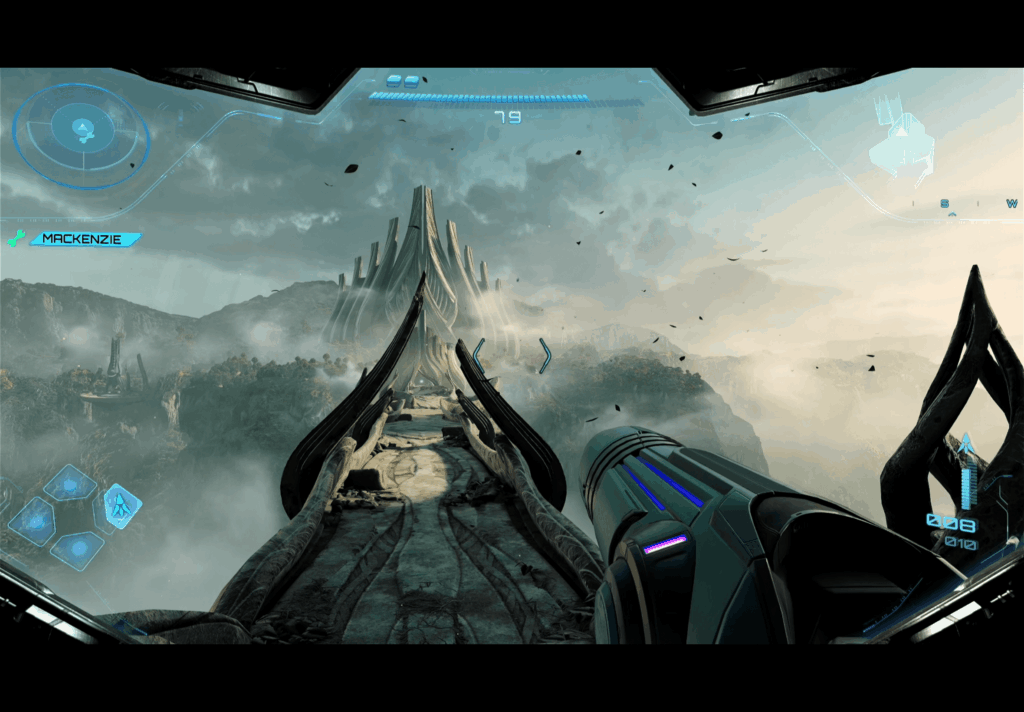
Metroid Prime 4’s visuals and soundtrack are a piece of art, and somehow it runs smoothly at a constant 60 fps or 120 fps.
There isn’t a single area of this game that I wasn’t in awe with, but if I had to choose one, I’d have to go with Volt Forge. Specifically the moment where you finally start the engines again and you see this place come to life.
The music suddenly shifts to fit the tone, and you can see enemies that were dormant come at you with everything they’ve got. You’re going through the same places you’ve just been, and everything feels so different, more spectacular and dangerous. And it is something you can expect from every level you play.
What happens when all of that art is focused into a single encounter?

You get some of the most visually appealing boss fights in Metroid’s history.
I loved the cinematic scenes during Metroid Dread’s boss battles, especially against Raven Beak. But in Metroid Prime 4, the cinematic is everywhere, and you can truly feel the threat they represent.
And if you play this on Switch 1 or the Switch Lite, I can assure you that the game also runs and looks phenomenal. I played all the way until the end of Volt Forge on Volt Forge, and while I could tell the resolution took a hit, the performance was solid and the overall aesthetic was well preserved.
Is Metroid Prime 4 worth it?
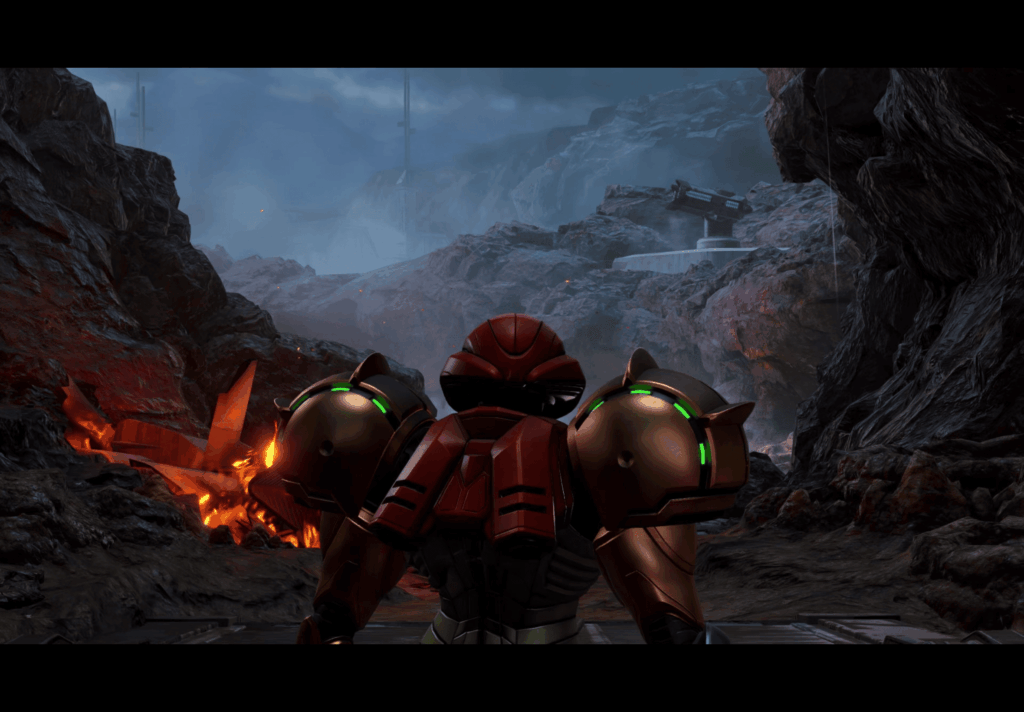
So, with all of that said, is Metroid Prime 4 worth it? Does it close the gap between 2D and 3D Metroid, and ultimately, is it a good game?
My biggest complaint with Metroid Prime Remastered was how confusing it was to navigate through the levels in 3D, and it was the reason I ultimately dropped it. Moving through that world never felt intuitive to me, and too often I found myself lost.
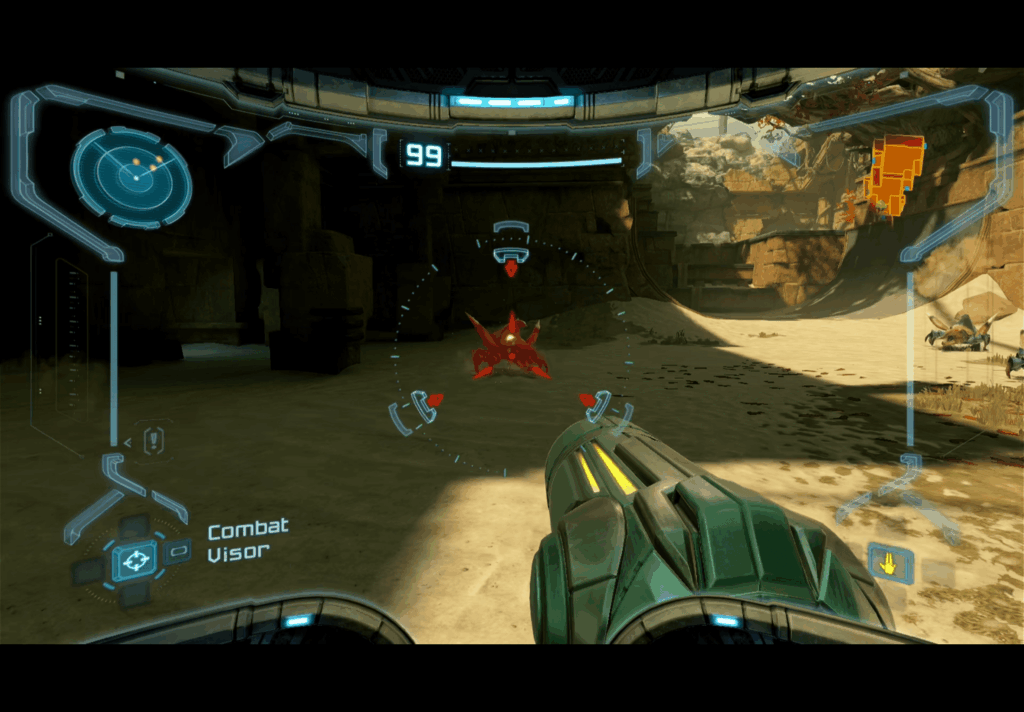
Metroid Prime 4: Beyond takes an entirely different approach. Its levels are more linear, meaning I never got lost or confused while trying to make progress. So, you can say that this entry sacrifices the complex, interconnected level design the franchise is known for in favor of accessibility. And because of this, it’s a great entry point to the Metroid Prime series.
After I was done with the game, I went back and started a new save file in Metroid Prime Remastered and found myself being able to navigate through those levels better. And I can finally appreciate it, because this is truly one of the best transitions to 3D a game could ever have.
Metroid Prime 4 is a good Game

In the end, Metroid Prime 4 is not a perfect game. The companions break the Metroid experience for me, and Sol Valley is an undercooked area that entirely ruins the pacing of the game.
But even with this, it’s a good game. The gameplay surrounding the new power-ups and the way you used to interact with the world around you are tight. Exploring the dungeons is as fun as any other Metroid game, and the visuals and soundtrack are the best Nintendo put out last year.
Metroid Prime 4: Beyond doesn’t fully close the gap between 2D and 3D Metroid to me, but it comes closer than I ever expected, and that alone makes it worth playing.