Share This Article
–Little Town Hero is Game Freak’s most overlooked RPG. With a Toby Fox soundtrack and a unique battle system, why did it fail?
The year was 2019, and Game Freak, the creator of the biggest franchise in the world, released a brand-new game that wasn’t Pokémon. And it flopped.
Little Town Hero was officially showcased during a Nintendo Direct that same year, but even then, it struggled to capture much attention.
If you scroll through the comment section of the announcement video today, you’ll mostly find two types of reactions: those criticizing how bland and unpolished the game appears and those praising Toby Fox’s excellent soundtrack—which I’ll touch on later.
You’d expect being associated with a company that generates billions would allow for a big budget for video games, but the truth is that even the Pokémon games only see a fraction of that money as a budget.
And for Little Town Hero, the budget was even smaller.
Game Freak’s Secret Development Team
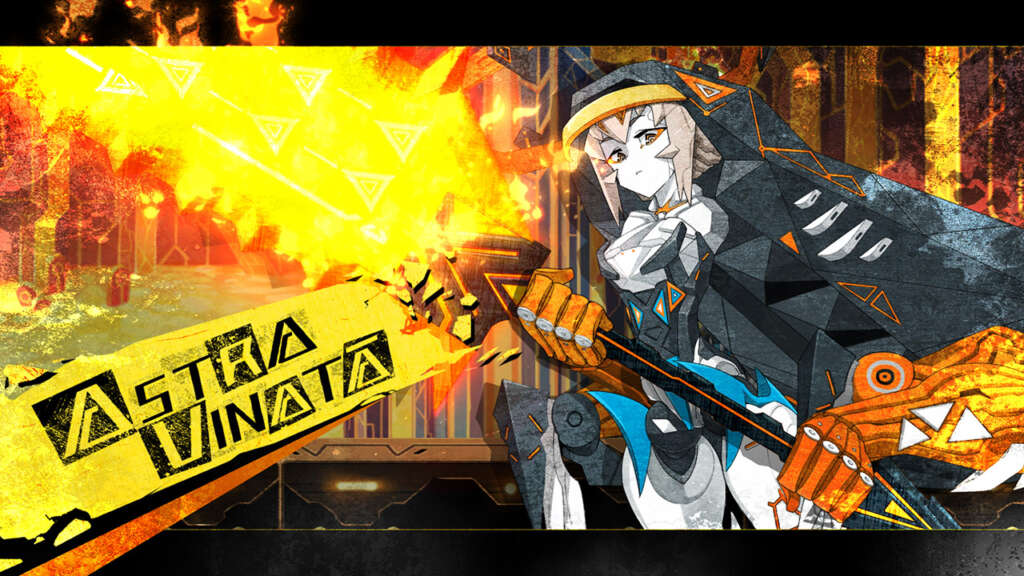
In fact, Little Town Hero wasn’t even developed by Game Freak’s main development team. Internally, Game Freak has a small team called Project Gear dedicated to developing new ideas into new and fresh video games.
Such are the examples of Giga Wrecker and Pocket Jockey, also available on the Nintendo Switch.
What Has Project Gear Made Before?

Giga Wrecker might look a bit rough, but it’s a fun platformer with a polished mechanic called Debris Manipulation that feels good to use throughout the game.
And Pocket Jockey is just as addicting as it was on the Nintendo 3DS. Who would’ve guessed that mixing Solitaire and horse racing was a good idea? If you have to try another Game Freak game, please play this one because I want them to make another one.
However, even though their most recent titles targeted the Nintendo Switch, Project Gear isn’t something recent; if you go further back in time, you’ll find more games developed by this team, like HarmoKnight on the Nintendo DS. It’s one of my favorite rhythm games on the console, and as a kid I didn’t even know it was developed by Game Freak!
Looking at their Metacritic scores, we can definitely see that at least these games, apart from Little Town Hero, had a good reception. Although you should always take these numbers with a grain of salt, especially when there are so few scores to make these averages.
Even so, looking at how poor the reception was, the lack of coverage, and having experienced the full game myself, I can safely assume that Little Town Hero underperformed.
So, “What Went Wrong with Little Town Hero?” How could a game with such an enticing premise, unique gameplay, a great soundtrack, and lovely art direction flop?
That’s what I want to explore a bit more. Take a seat, and let’s explore these points together, starting with the setting.
The Setting: An Isolated Village With a Big Secret
The whole game revolves around an isolated village protected by a big castle that doesn’t allow anyone to leave. This sounds a bit awful, but every villager appears to be content with their life inside these walls. Except for a small boy named Axe, whose will to see the rest of the world often gets him and his friends in trouble.
One day, after one of his failed attempts at storming the castle’s gates, he met a soldier who was cast out of the castle. The soldier takes a liking to the boy and offers to train him, and one day, after one of their regular practices, a monster suddenly appears, and it’s up to Axe and his friends to defeat it and find out where this monster came from.
A Story That Goes Deeper Than Expected
From here, the story slowly shifts from a lighthearted tale about childhood dreams into something more mysterious.
Eventually more monsters start to appear, with the beach encounter bringing Axe closer to understanding the truth behind the village’s isolation, but it also highlights how limited his world truly is.
Although it’s not the best story, I feel it delivered what it needed and gave proper development to the characters, especially to Axe’s rival.
The story and characters were my favorite part of the game and what pushed me to finish it in the first place. I just had to know where the monsters came from! Although, I admit at some point some aspects became predictable. I mean, who would’ve guessed that a character that looks like a bad guy is revealed to be a bad guy in the end, right?
But even so, I am always eager to explore the village after each chapter, looking for new NPCs to talk to and maybe new areas to explore.
Limiting the scope and characters truly helped flesh out the idea that this is an isolated village, much like the rural villages around my hometown, where everyone knows each other and is always eager to lend a helping hand.
And it’s even more surprising that they managed to turn this into an actual combat mechanic, but before going through that, let’s start from the beginning.
Battle Mechanics: Fun but Frustrating
Battling monsters is where the core gameplay of this game is, and it can be quite entertaining but infuriating at times. Despite being called an RPG, Little Town Hero combat takes inspiration from modern TCG games like Hearthstone.
How the Dazzit System Works
You have a deck with skills called Izzits that cost Power to be turned into what they call a Dazzit. Once you have a Dazzit, you can put it up against your opponent’s own Dazzit with the intent of breaking it.
Breaking all of your opponent’s Dazzits will result in a Chance Turn where you’ll be able to attack its hearts; break them all, and you win the match. But it’s not as simple as it seems since before reaching the hearts, you must break a shield that has a certain amount of points, and it regenerates every time you attack a heart.
Also, to make things a bit more difficult, you can only attack the shield and the hearts with a Red Dazzit, which can only be used once a turn. This really makes you think twice before wasting one, and it made me favor the Yellow Dazzits more. Despite not being able to attack the hearts, they can be used several times in a turn until they break. Combining this with the support of Blue Dazzits really made my life easier during each battle.
The Board and Your Neighbors
Still, there’s another major feature that you’ll have to get used to. In every monster battle, you’ll be playing on a board, and by the end of each turn, you’ll roll a die to move around. Scattered around the board are several ‘traps’ that can be activated with a certain Dazzit to deal damage to the monster.
And this is where your neighbors take to the battlefield. You’ll find them scattered around the board too, and they are more than happy to lend a hand; some can do damage, others can heal you, and others can even give you new Dazzits. Knowing how and when to use them is key to safe turns and makes battles end quicker.
The Biggest Problem With Combat
Although I really liked this concept and the gameplay itself, I found myself feeling frustrated by how long a single battle took to complete, even if a monster wasn’t particularly strong or difficult. The only monsters that I genuinely found challenging were an optional boss and the last boss. Both took me forever since breaking their shield was a very annoying task… And by long I mean more than 30 minutes.
How to Get Stronger in Little Town Hero
Luckily, there’s a way to increase your chances of winning and make battles a bit shorter.
Although your character doesn’t level up, you can improve your Dazzits by spending Eureka Points that you can earn after completing a battle or a side quest. If you walk around the village every chapter, you’ll find villagers that need your help, and I tried to help as many as I could, not just because I wanted the extra points but because I really enjoyed knowing more about each person in this village.
Don’t Miss These Side Quests
The village itself has a considerable area, and by exploring it you’ll eventually find someone who has a quest for you. Some of these quests will only be available in certain chapters, so you should always be on the lookout for them. Miss one, and the only way you’ll be able to get it is by starting a new game. The game isn’t that long to complete, but there are battles that you’ll probably wish you won’t have to go through again.
Sometimes you’ll also have the opportunity of battling optional bosses, but again, they are tied to specific chapters, and you should make sure you don’t miss them either if you want to 100% this game, since this game has a “Pokédex” featuring all the bosses you’ve defeated. It’s a fun mechanic that rewards exploration, even though the game doesn’t always make it easy for you.
It’s Game Freak Alright
One thing that I found wonderful was how easily you can tell that this game was developed by Game Freak, from the character models movement jank to the annoying roadblocks that prevent me from exploring things for myself.
Too Many Roadblocks Too Early
At the beginning of the game, I wanted to walk around on my own, and there are roadblocks everywhere. I can’t go to the open fields, I can’t enter the castle, and I can’t explore the village to interact with the characters and learn more about the world.
I was already one hour into the game, and I still felt shackled. There must be another way of making sure the player has a safe environment to explore without breaking the game without limiting their options, right?
What Little Town Hero Gets Right
But being developed by Game Freak also means the monster designs were bound to be good, and I do have to give my praises to them. Each one I encountered was unique and detailed! And to flesh them out even further, they were given different soundtracks and different sets of skills, making each battle feel memorable.
The Soundtrack: Toby Fox and a Forgotten Hero
As mentioned previously, Toby Fox was heavily involved in the composition of the soundtrack. And Nintendo thought that this would help them sell more copies, since they decided to include it in the announcement trailer as well as on their official website.
But, on the website, there’s also another mention, Hitomi Sato, responsible for composing some of the most nostalgic OSTs in Pokémon since Pokémon Ruby all the way to their remakes on the Nintendo 3DS.
So, although it’s great to see Toby Fox getting so much recognition, Hitomi Sato also deserved a mention, and this is just me doing my part!
A Great Soundtrack Can’t Save a Repetitive Game
But ultimately, a fantastic soundtrack from a proven independent developer and a veteran is not enough to save you from the monotonous boss gameplay… I did find out that lowering the difficulty does make things more bearable, and I would recommend anyone doing this, especially if you’re playing it for the first time and not having a good time.
Even if you play optimally, you’ll just be doing the same things over and over again, with no sight of its ending, and that’s my biggest complaint with this entire game. Nothing is more heart-wrenching in this game than losing a fight after 30 minutes of gameplay… I remember being so mad at the last boss that I had to take a break from the game and only came back a couple of days later.
So, What Went Wrong with Little Town Hero?
Judging Little Town Hero’s lack of success is effortless, actually.
Usually good games fail because of bad timing. Being released in a window of time when great games are already being released is always a good indicator of why your lesser-known game failed. But such wasn’t the case. When this game was released, the only notable game by Nintendo being released in the same month was Luigi’s Mansion 3.
A Mix of Great Ideas and Poor Execution
It pains me to say this after all these years, but Little Town Hero is not a good game, unfortunately. I remember it rather fondly, and even looking back at my initial review I wrote for my blog, I wholeheartedly recommended it despite its flaws.
But the truth is that Little Town Hero is nothing more than a mix of great ideas with bad execution, probably tied to budget constraints. Their only redeemable points are the music, art style, and the amazing Big Idea Edition, which is a great piece to have for any collector.
It comes with a nice art book, some pins, a poster, and a CD soundtrack, which I played in my car for a couple of days while taking my daughter to school.
Is This the End of Project Gear?
I would like to say that Little Town Hero crushed any possibility of a new Project Gear since we haven’t seen one since 2019, but there are other factors in the mix, like the pandemic hitting months later.
For years I thought that this was the case, but they’ve proved me wrong by showcasing the most graphically impressive game Game Freak has ever produced. The game in question is Beast of Reincarnation, and it has the potential to expand Project Gear further by providing more interesting titles that are not Pokémon.
But despite all of its shortcomings, Little Town Hero was still a memorable experience, one that lingered on my mind and got me to eventually write this long review years after its initial release. Proving your game doesn’t have to be a perfect masterpiece to have any sort of impact on someone’s life.
Thanks for reading, and if everything goes well, I’ll be seeing you again next time with brand-new content.