Share This Article
If you’re a Nintendo fan, you’ve probably noticed how much prices have gone up with the Switch 2. And honestly, the most surprising part isn’t even the console itself. When you stop to think about it, we basically have a portable PS4 in our hands, and that’s kind of insane.
But the game prices are where things get harder to justify.
The Real Problem: Game Prices

Nintendo-published games are now launching at prices that feel entirely different from what we were used to in the Switch 1 era.
I’ve paid full price for games like Cyberpunk 2077 at launch. Even though it originally released in 2020, it’s a massive AAA experience with tons of content, including the Phantom Liberty DLC, and is easily one of the best games of the decade.
I’m also looking forward to playing Elden Ring on a handheld. That’s the kind of experience where paying €70 feels acceptable, considering the scale and depth of the game.
However, Nintendo games are a different story.
At launch, Mario Kart World caused a massive uproar when its price was finally revealed. It sat at an absurd €89.99 and $79.99 for the physical edition, and back then I had to choose the bundled version because there was no way I would be spending that much money on a video game.
Are People Actually Paying These Prices?

The other day, I went to the only electronics store in my hometown, a Worten, and came across something interesting. I saw Mario Kart World sitting on the shelf for €62.
That immediately caught my attention, because on the official Nintendo store, the same game is listed at €89.99 in Europe.
Still in a state of complete disbelief, I asked the employee if this was some kind of temporary discount.
It wasn’t.
He told me that, at least in that store, this was simply the price they were selling it for going forward. And it wasn’t just Mario Kart World, I glanced at the rest of the games on the shelf and saw major Nintendo titles heavily discounted, from Donkey Kong Bananza to Kirby Air Riders.
Comparing Prices: Worten vs FNAC vs Nintendo
Since Worten is one of the biggest electronics retailers in Portugal, I decided to check their online store and compare it with their direct competitor, FNAC, as well.
And what I found was interesting — here’s the breakdown:
| Game | FNAC | Worten | Nintendo |
|---|---|---|---|
| Kirby Air Riders | €64.99 | €63.99 | €79.99 |
| Donkey Kong Bananza | €64.99 | €62.99 | €79.99 |
| Mario Kart World | €69.99 | €76.49 | €89.99 |
| Hyrule Warriors: Age of Imprisonment | €64.99 | €63.99 | €79.99 |
| Metroid Prime 4: Beyond | €69.99 | €55.99 | €69.99 |
| Kirby and The Forgotten Land + Star-Crossed World | €79.99 | €67.99 | €79.99 |
A Consistent ~20% Price Drop
Despite some variation between stores, one thing is very clear.
Most of these games are already selling for €15–€20 less than Nintendo’s official pricing. That translates to roughly a 20% discount.
What makes this particularly interesting is that this isn’t happening months or years after release. It’s happening just a few months after launch.
How Does This Compare to the Switch 1 Era?
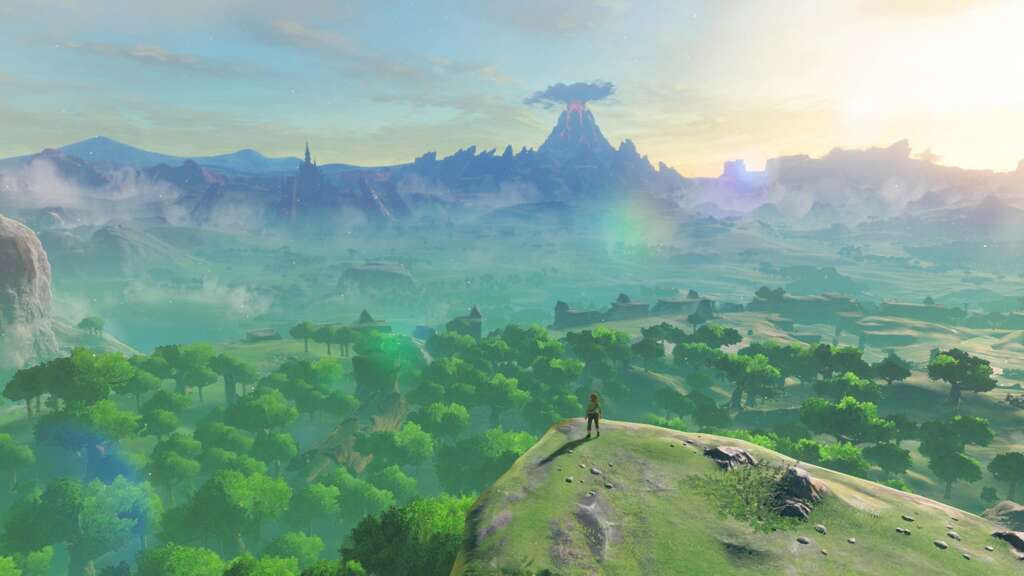
This becomes even more intriguing when compared to older titles.
For example, I found The Legend of Zelda: Breath of the Wild at FNAC for €52.99, down from its original €59.99 price. That’s only about an 11% discount after nearly nine years on the market.
So we now have a strange situation where older games see small price drops over time, while newer games are discounted heavily right away.
What Does This Mean?
In my opinion, it means Nintendo has set the bar too high.
Prices in the €80–90 range for standard games don’t seem to align with what consumers are actually willing to pay, and retailers are adjusting quickly to reflect that.
Consumers Are Voting With Their Wallets

At the end of the day, consumers speak with their wallets.
If prices are already dropping this much, this early, it suggests that people simply aren’t buying these games at full price, and stock is starting to sit on shelves.
Even during the Switch 1 era, I rarely paid the full €60 for a game, since pre-order discounts of around 10–15% were common, placing prices between €50–€52.
Now, constantly being asked to pay more than €65 with a pre-order discount for each Nintendo release still feels new, and honestly, a bit excessive.
Final Thoughts: Is the Market Pushing Back?
Usually, consumers adapt to higher prices over time, but this time, we might be seeing the opposite. Instead of accepting €80–90 as the new normal, the market is pushing back.
If there’s a Switch 2 game you’re interested in, there’s a good chance its price will drop by around 20% within a few months—and that’s the only reason I’m holding off on Pokopia!
Thanks for reading, and if everything goes well, I’ll be seeing you again next time with brand-new content!