Share This Article
After ranking all the mainline Pokémon games on Switch, it’s time to do the same with a franchise that has an extensive 40 years of history in gaming, The Legend of Zelda.
And the key point here is mainline games. Meaning I will not include the Hyrule Warriors games, despite playing Age of Calamity and enjoying it thoroughly. I will also not include any game available on NSO for now since I haven’t gotten through all of them enough to voice my opinion.
So with this said, here are the best Legend of Zelda games ranked by yours truly, from worst to best.
Skyward Sword
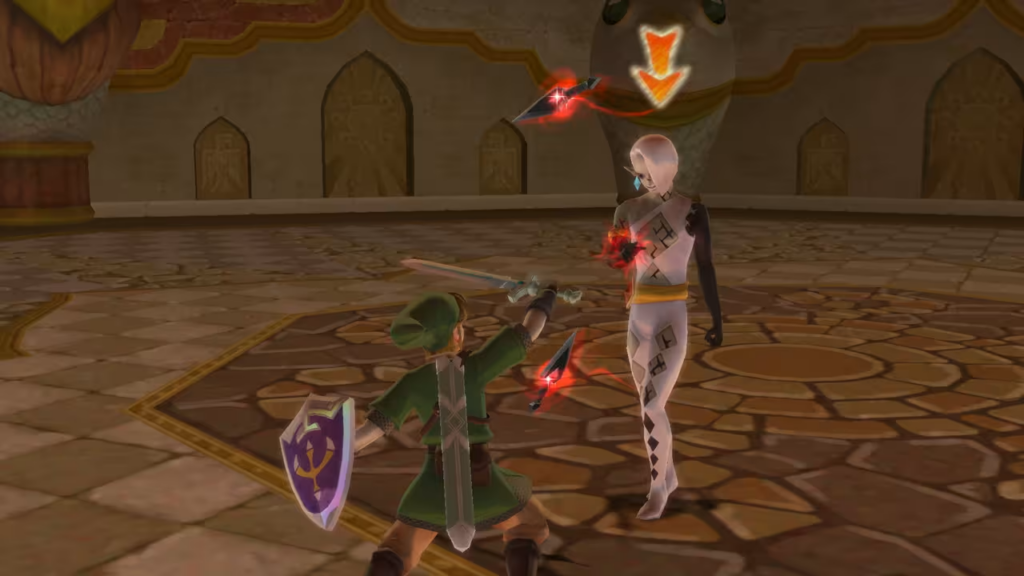
You know it, and I know it. The controls for this game are not good. Playing this game with motion controls is a terrible experience, and the second control scheme isn’t great either. But I appreciate them for trying to find a solution to a problem that was such a big part of the entire experience.
It’s a shame that not many people will want to pick up and play this game once they hear how poor the controls are, because there is a lot to love in this game! The dungeons are great with good puzzles, the characters feel real and not one-dimensional, the boss battles are amazing, and the ending was so f***** good. I loved the twist and the one-on-one that followed suit in this beautiful scenery with a great tune playing in the back. It really felt like a true climax.
However, it turns out, this was just the beginning.
In case you don’t know, Skyward Sword is where the story of The Legend of Zelda truly starts. It’s the ending of this game that sets in motion the events of every other iteration, which is why I wanted to try it for myself despite already knowing I would absolutely despise the controls.
Should you play Skyward Sword on Switch? I’d say yes. The controls are bad, but the journey makes up for it!
Link’s Awakening
Link’s Awakening is a perfect remake/remaster, and I don’t think I can say a single bad thing about it, except for the price. We all know the game is great, but $60 is too much in my opinion.
And this is the only reason why it took me so long to finally purchase and play it, because I remember jumping off the couch once I saw the trailer come up on that Nintendo Direct.

I never had the chance to play the original, but I did play Oracle of Seasons too many times throughout the years, and it’s probably my most favorite Zelda game of all time.
This is why to this day I prefer 2D Zelda, and I’m hoping the other Game Boy Color titles get the same treatment as Link’s Awakening because everything was so well ported to the modern age. The character designs are adorable, the color palette is beautiful, the soundtrack brings joy to my ears with that perfect interpretation of the main OST, and the controls are as responsive and satisfying to pull off as I remember on the Game Boy.
How many of you would prefer to hop around using the Roc’s Feather instead of walking like a normal person? I legit want to know.
But in conclusion, go play Link’s Awakening, it’s fantastic.
Echoes of Wisdom
I played Echoes of Wisdom and Link’s Awakening back-to-back, and while at first I was struggling to put one in front of the other, the more I played Echoes of Wisdom, the more the answer would become clearer.
Echoes of Wisdom is not superior in every way, but as a whole it is.
First of all, I was blown away by the scale of its world—it truly felt as if I was playing a Breath of the Wild game in 2D. And hey, they did try to convey that in a sense, from the menu UI/UX to Link’s design and sound design.

Then there’s the fact that this world is massive. Link’s Awakening map is decently sized for a 2D Zelda game, but it could all fit in a corner of the map of Echoes of Wisdom. And exploring is super fun! There’s always something new to discover, from new quests and dungeons to the highlight of the game, Echoes.
I’ll get this out of the way and say that yes, the way you select Echoes is terrible. But they are fun to use and are a mechanic that I want to see explored again, especially the echoes of monsters. Believe me, I felt like a Pokémon Master at times and questioned whether this belonged on my Best Games Like Pokémon list. I hope next time Nintendo introduces some leveling mechanics and evolutions—it will sell like cupcakes.

Also, let’s not forget that this is the first mainline Zelda game you mainly play as Zelda. You do play a bit of Link in the beginning and can transform into Echo Link, but I didn’t see myself utilizing it much outside of the situations that required it.
In sum, this is an excellent, polished title that runs even better on Switch 2 with Handheld Boost Mode. It’s definitely a great title to have in your collection, but it’s not as genre-defining as the next two games on the list, which push exploration and creativity to even higher heights.
Breath of the Wild
I think we all knew that the best Legend of Zelda game on Switch would be either Breath of the Wild or Tears of the Kingdom. And while not everyone agrees, I believe Tears of the Kingdom has a slight edge.
Breath of the Wild is a phenomenal game, one that rarely appears capable of inspiring and shaping an entire genre around it. The open-world mechanics and vibes were replicated in so many games that I’ve lost count.
But I didn’t feel as captivated by it as others when I first played. Heck, I didn’t even buy it at launch. First because I didn’t have a Nintendo Switch just yet, and second because I still preferred the 2D Zelda games to 3D. A Link to the Past, A Link Between Worlds, Oracle of Seasons, and Oracle of Ages are the games that made me fall in love with the franchise, and I got demotivated as years passed because the 2D formula was getting forgotten.

I had played Ocarina of Time and even Majora’s Mask, but I never got to see the end credits of either, despite their being acclaimed as the best Zelda games by many. So, there was little to no reason to care about Breath of the Wild.
But then I played it for 60 hours.
I have to say that the beginning of the game is slow, but as soon as you get out of that starting area and are allowed to explore the world freely, that’s when I understood what made this game so special. You can clearly tell you are playing in an age when a great calamity hit the land. While there are lush pastures, beautiful rivers, and mountains, you hardly come across anyone unless you visit a town. Most places you pass are filled with ruins, monsters, and secret caves ready to be explored.
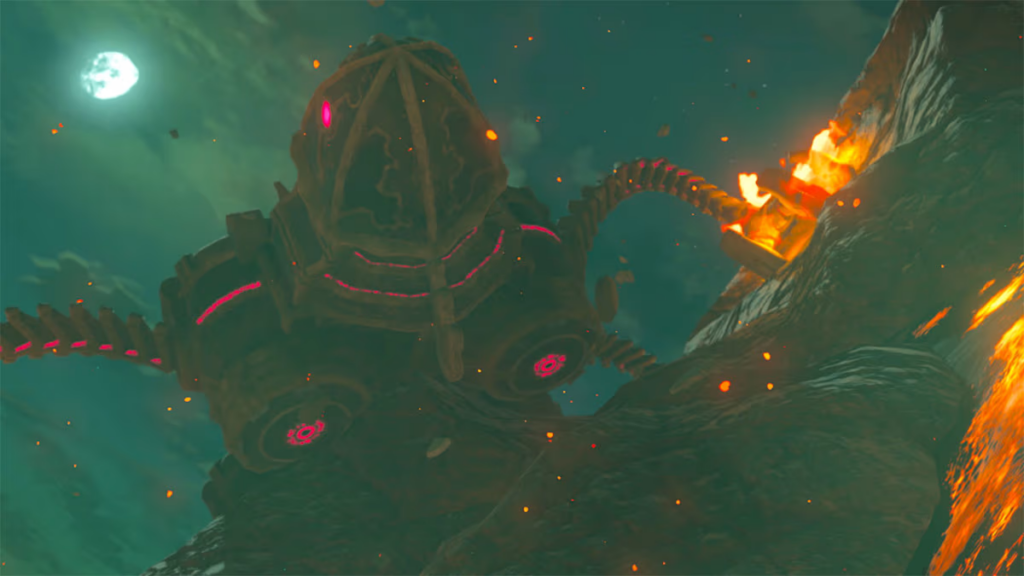
Every once in a while you’ll spot a shrine with a puzzle or combat challenge that usually can be completed in different ways, thanks to the different abilities Link has at his disposal. The story is also minimal unless you go out of your way and find all the memories. And once I found them all, I felt it was time to go and defeat Calamity Ganon and bring peace to Hyrule once more.
But before that I still had to conquer all the Divine Beasts, which I remember being great, but I felt I played against the same boss 4 times.

Afterward, I got my Master Sword and finally put an end to Calamity Ganon and saw the credits roll. But even so, I came back once in a while since the game is super relaxing to play. And I played it even more when the Switch 2 Edition dropped and explored far more than I previously did. I loved interacting with every single character I found—especially building the town of Tarrey Town, which was definitely a highlight and can be missed entirely.
What I didn’t like was how the weapons broke so easily. I’m not against this system, but please give me more durability so I don’t have to scour the land for new weapons. At one point I was so afraid of breaking my best weapons that I started hoarding them at my house.
The Koroks can also go to hell. I will never go out of my way to find a single one again in my life.
Tears of the Kingdom
Starting off Tears of the Kingdom, one thing is clear—there’s a bigger emphasis on narrative and storytelling, which in turn made the initial impression much stronger than Breath of the Wild, in my opinion.
This was only possible due to the groundwork the previous game did. You are no longer playing in a desolate Hyrule. After the defeat of Calamity Ganon, the people began rebuilding what was lost, and in consequence, there are far more people and small settlements around. So even though the landscape is the same, there’s still incentive to explore. But this is just on the surface—traveling up and down will take you to the Sky Islands or the Depths.
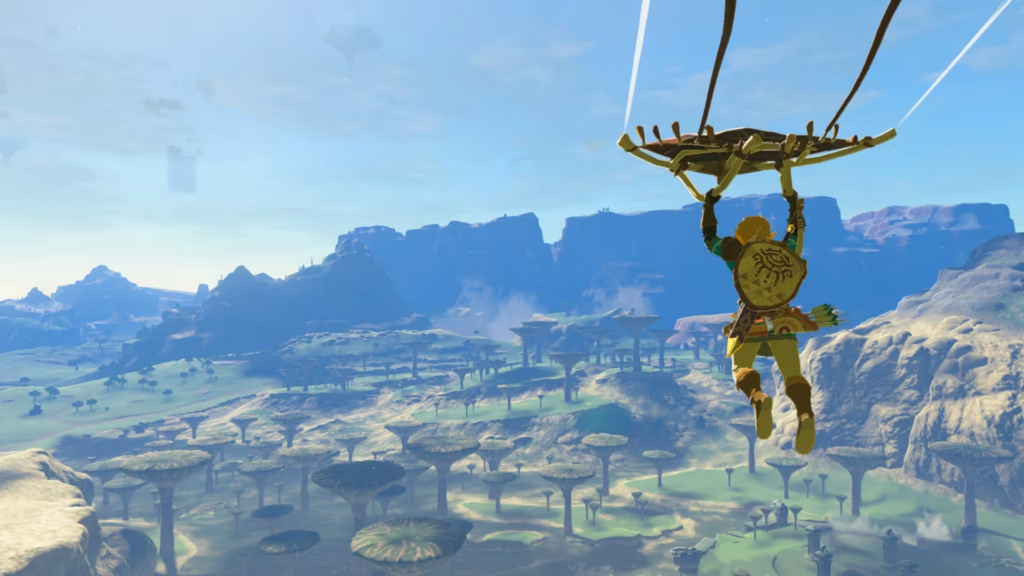
After the initial part of the game, the Sky Islands appear, and exploring each one of them is rewarding but challenging. Some are straightforward and only require you to launch into the air from a Skyview Tower, while others will require you to build your own flying machine to reach them.
You already had a lot of creative freedom with the Sheikah Slate, but with the Ultrahand, you’re only limited by your imagination. Your creations can span from simple things such as combining two weapons into one to creating a huge mech that can shoot lasers and fly. However, building something complex does take commitment, like powering up your energy cells and mining Zonaite Ores underground so you can auto-build your creations.

This means you’ll need to go to The Depths, an underground area that’s as big as the entirety of Hyrule. The first time you get here, the atmosphere while you dive is incredible. You’re entering an unknown area that resembles nothing you’ve seen before. It’s dark, cryptic, and unsettling. But I admit the effect wears off after a few hours—you’ll soon realize there isn’t that much to do down there, and you’ll be speedrunning through the Lightroots and calling it a day.
Shrines are still fun to go through, but since the Zonai abilities were so much fun to use, I saw myself completing each one. Although I have to admit that despite having so many options on how to tackle the puzzles, I saw myself using Rewind a bit more than the others.

The weapon durability is still around in this game, but I didn’t feel it hurt the experience this time around. With the Ultrahand, you can combine any low-grade weapon you find with a powerful item whenever you want, and trust me, you can make that damage number go really high. You can make weapons so broken that even those terrifying Gloom Hands will pose no threat.
Ganon was still a good challenge, though, especially getting to him! And just like in Breath of the Wild, you don’t have to complete all the major dungeons to reach him—but I feel it’s a bit more challenging to get there this time around.
In conclusion, Tears of the Kingdom is better than Breath of the Wild due to its focus on narrative, expansive world, better abilities that allow for even more creative freedom, and somehow fixing the weapon durability problem. You might think the other way around, but it’s great that people have different opinions!
Were These the Best Legend of Zelda Games?
We’ve reached the end, and I want to know what you think. Do you agree with the list? Have I ranked the Legend of Zelda games correctly, or is there a placement you don’t agree with?
I already knew my reasoning for each placement, but there was one thing I only found out while writing this. My top Zelda games are the ones that have more creative freedom, and I think that has now become my expectation for each new Zelda game. It’s not just about solving a puzzle, but how can I solve it in different ways?
Thanks for reading. If everything goes well, I’ll read your answers, and I’ll be back with brand-new content!